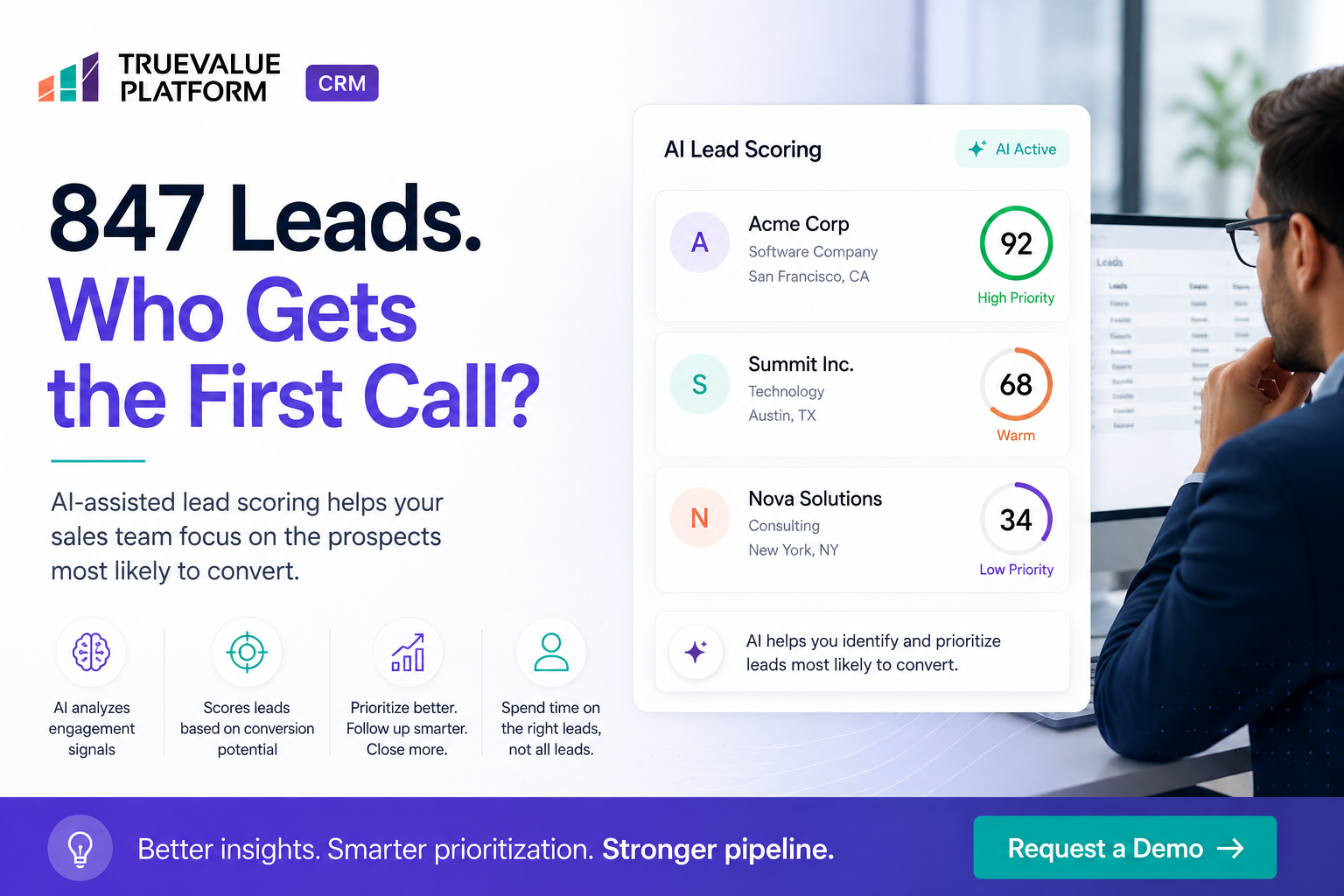
847 Leads. Who Gets the First Call? How AI Lead Scoring Can Help Sales Teams Prioritise Better
Your CRM may be full of leads, but which ones deserve attention first? Discover how AI-assisted lead scoring can help sales teams prioritise opportunities, reduce manual decision-making, and focus on the prospects that matter most.
Monday morning.
9:07 AM.
Your salesperson opens the CRM.
There are 847 leads waiting.
Some came in yesterday.
Some have been sitting there for weeks.
Some opened an email.
Some requested information.
Some looked interested and then disappeared.
And somewhere in that list could be the person most worth speaking to today.
The problem is simple:
Who gets the first call?
For many sales teams, that decision still depends on manually checking records, reading notes, comparing activities and relying on instinct.
That works when you have 20 leads.
It becomes much harder when you have hundreds.
This is where AI Lead Scoring becomes interesting.
The Real Sales Problem Is Not Always More Leads
Businesses often assume that sales growth starts with generating more leads.
More traffic.
More enquiries.
More forms.
More calls.
More prospects entering the funnel.
But more leads can create a new problem:
more decisions.
If your team has 500 active prospects but only enough time to contact 20 today, they need a way to decide where to focus.
Without a clear prioritisation process, salespeople may spend valuable time reviewing every lead individually.
They open one record.
Check the company.
Read the previous activity.
Look for notes.
Go back.
Open another.
Repeat.
The CRM may contain plenty of information, but the salesperson still has to turn that information into a decision.
If scattered customer information is already slowing your team down, read our guide on how fragmented client data creates hidden productivity problems.
What Is AI Lead Scoring?
AI-assisted lead scoring adds another layer of context to lead prioritisation.
Instead of expecting salespeople to treat every lead equally, lead scoring can help organise prospects according to available information and relevant signals.
The goal is not to replace the salesperson.
It is to help them answer a practical question faster:
“Which leads deserve my attention first?”
Think of it like arriving at an airport.
Imagine looking at a screen containing 847 flights with no sorting, status or priority information.
Technically, all the information is there.
But finding your flight would take much longer.
Lead scoring works on a similar principle.
A long list becomes easier to navigate when useful priority signals help guide attention.
Try the Five-Lead Test
Here is a simple exercise.
Open your current CRM tomorrow morning.
Tell one salesperson:
“You have 30 minutes. Pick the five leads you would contact first.”
Then watch what happens.
Do they know immediately?
Or do they start checking:
emails;
spreadsheets;
old notes;
conversations;
activities;
deal records;
colleagues' messages?
If deciding who to contact takes almost as long as contacting them, your business may not have a lead-generation problem.
It may have a lead-prioritisation problem.
Why Lead Prioritisation Matters
Not every lead requires the same level of attention at the same moment.
One prospect may have only recently entered your database.
Another may already have meaningful activity associated with them.
A third may need follow-up from a previous conversation.
Without clear context, those three prospects can look like three more rows in a CRM.
Good sales systems should help teams move beyond storing information.
They should help make that information useful.
That is where TrueValue Platform CRM fits into the broader sales workflow.
TrueValue Platform CRM helps teams manage important customer information such as leads, contacts, companies, deals, activities and follow-ups within one connected Product.
AI-assisted lead scoring can complement that workflow by helping salespeople understand where their attention may be most valuable.
AI Should Support the Salesperson, Not Replace Them
There is an important distinction here.
A score should not automatically become a sales decision.
Salespeople still understand things software may not fully capture.
They know the conversation.
They understand the relationship.
They know when a customer asked to call next month.
They know when a prospect sounds interested but needs more time.
AI should provide additional context—not remove human judgement.
The stronger workflow looks like this:
CRM information → prioritisation signal → salesperson reviews context → salesperson decides what to do next.
That is much more useful than:
AI gives a number → salesperson blindly follows it.
The objective is better prioritisation, not less thinking.
From “Who Is in the CRM?” to “What Should I Do Next?”
This is the bigger shift businesses should think about.
A traditional CRM question is:
“What information do we have?”
A better operational question is:
“What should happen next?”
Your team does not need customer data simply because having data is useful.
They need it to help them work.
Who requires follow-up?
Which deals are active?
What happened previously?
Where should the salesperson focus?
That is when CRM starts becoming more than a contact database.
It becomes part of the team's daily decision-making.
CRM Is Only One Part of the Customer Journey
A lead does not experience your business as separate pieces of software.
They may discover your company through marketing, visit your website, make an enquiry, speak to sales, book an appointment and receive follow-up communication.
From the customer's perspective, that is one journey.
TrueValue Platform is built around connected business operations through purpose-built Products.
You can explore all TrueValue Platform Products to see how CRM sits alongside Appointments, Marketing, Site Flow, Task, PBX, HR, Recruit and Payroll.
If a high-priority prospect is ready for a meeting, you can also explore the TrueValue Platform Appointments Product.
Tomorrow Morning, Ask One Question
When your salesperson opens the CRM tomorrow, do not ask:
“How many leads do we have?”
Ask:
“If we could contact only five people today, would we know which five to start with?”
If the answer requires too much searching, comparing and guessing, the issue may not be the number of leads.
It may be how easily your team can prioritise them.
AI-assisted lead scoring is not about making salespeople disappear.
It is about helping good salespeople spend more of their time where it matters.
Want to see how CRM can fit into your sales process?
Or explore the wider TrueValue Platform Product ecosystem →.
Related Articles & Insights
Continue exploring connected workflows, product playbooks, and strategic guides.

AI Agents Are Everywhere. But Is Your Customer Data Ready for Them?
AI agents depend on the customer information behind them. Learn how data quality, CRM structure and connected customer context can prepare businesses for AI.

A Full CRM Is Not a Clear CRM: 4 Details That Keep Follow-Ups Moving
A CRM can hold plenty of customer data and still be difficult to act on. Learn how four simple details can make deal ownership, reviews and follow-ups clearer.
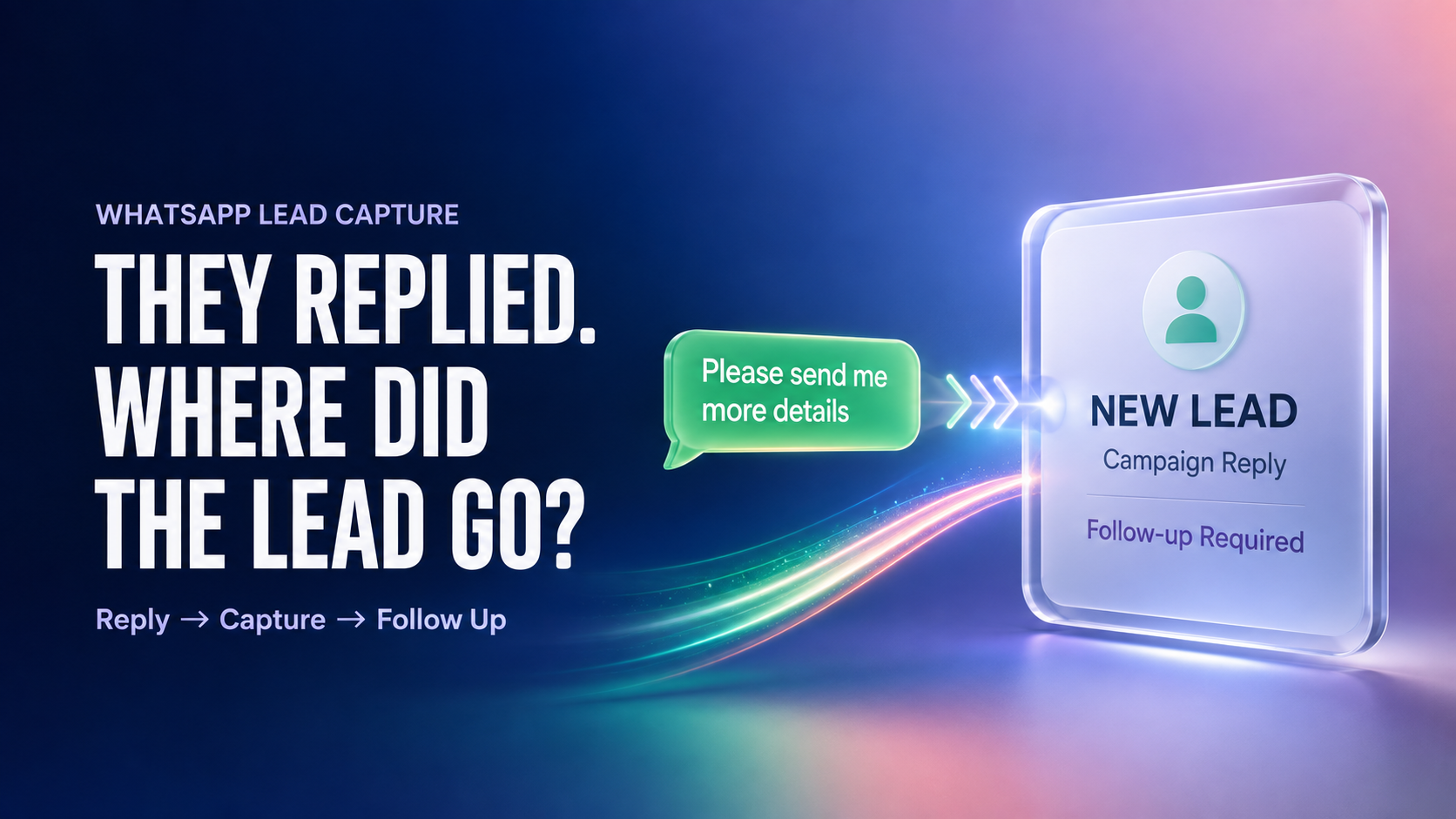
They Replied to Your WhatsApp Campaign. Where Did the Lead Go?
Learn why WhatsApp campaign replies get lost, what information a lead-capture workflow should preserve and how Marketing and CRM can support clearer follow-up.